CAIRN: AI-powered malware tracker
Did you know that malware using artificial intelligence leaves traces invisible to the naked eye?
Cisco Talos has developed a methodology to hunt them down without touching the binary.
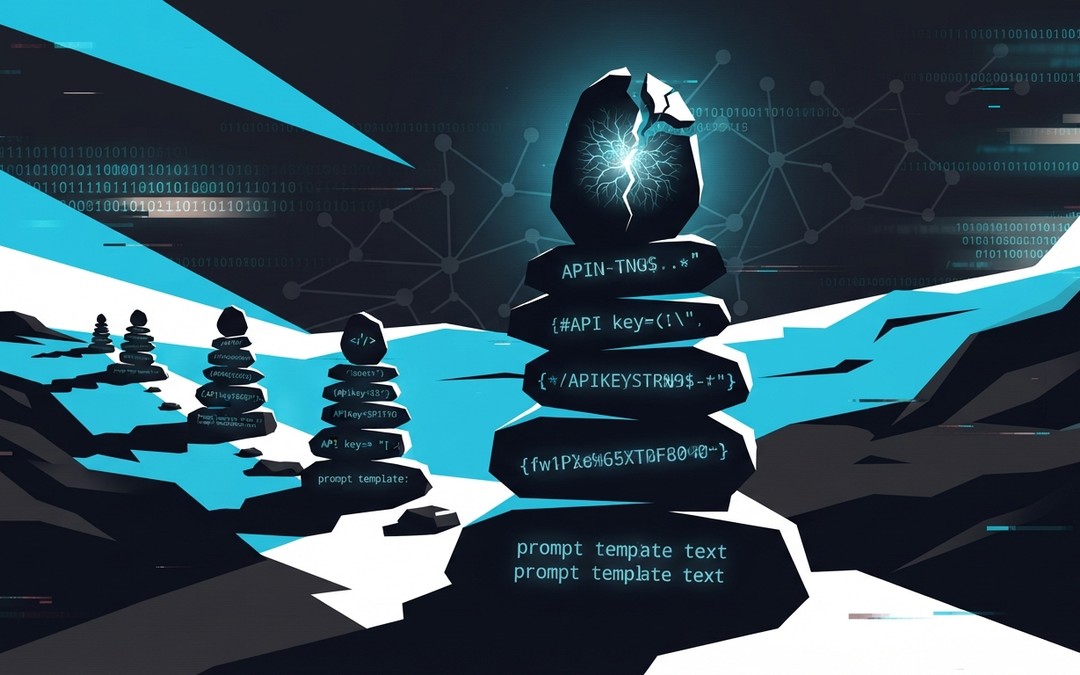
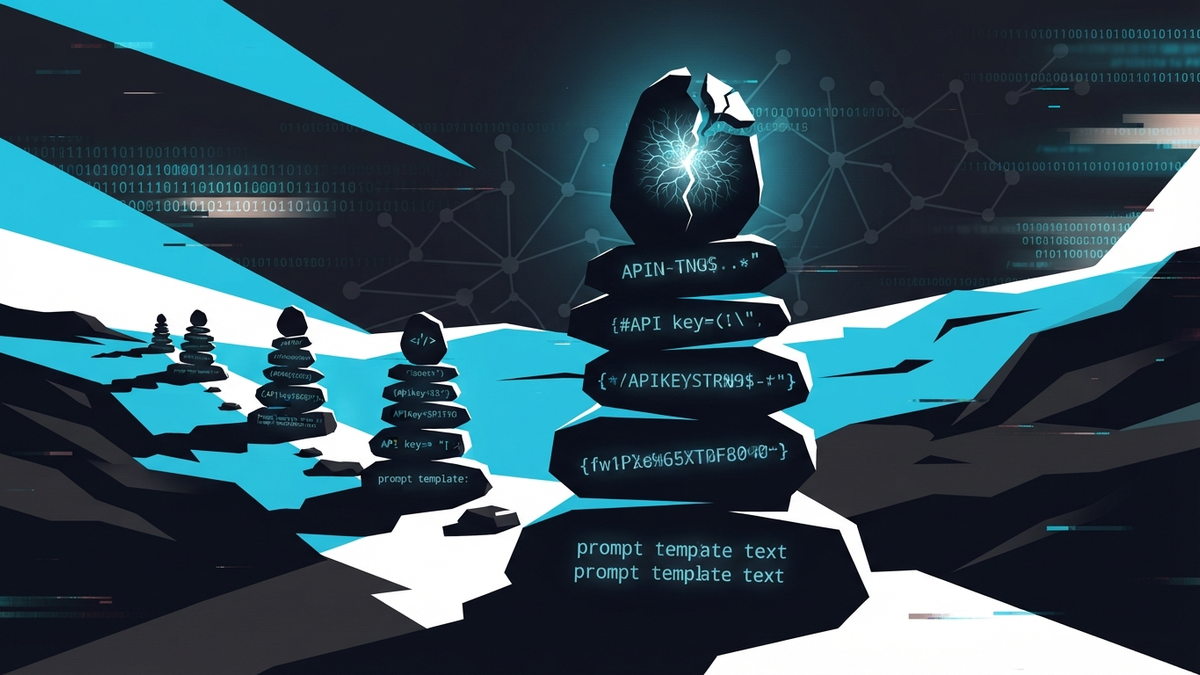
When an attacker integrates AI into their malware, they leave inevitable traces: prompt templates, API keys, and jailbreak strings embedded in the code.
These fragments, known as cognitive artifacts, are sufficient to identify, classify, and track entire malware families without needing to download or execute any file.
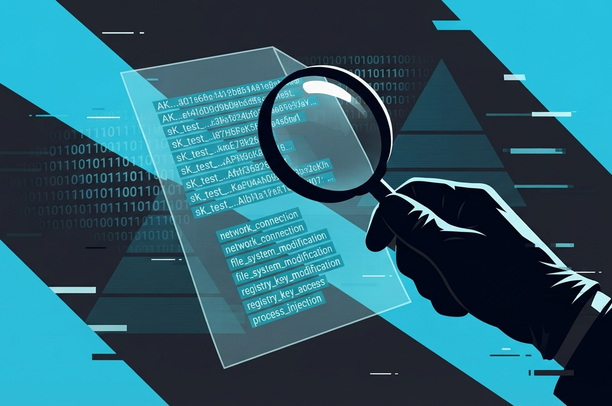
This is how CAIRN hunts the invisible.
CAIRN, which stands for Cognitive Artifact Intelligence Research Network, is a toolkit that operates exclusively on metadata. It combines rule-based detection, semantic clustering, and relationship graphs to identify AI-enabled malware. Its twenty-four filters track extracted strings, sandbox behavior, and antivirus tags, storing results in a SQLite corpus where YARA rules are automatically applied upon importing each sample.
Without downloading the binary, you already know which family it belongs to.
The key lies in its three-layer ontology: T1 artifacts, T2 behaviors, and T3 confirmed families. T3 rules are the most precise but the hardest to build: the best indicator revealed by reverse engineering never surfaces at the file level. That is why CAIRN uses what is observable in metadata, treating deep detail as a proxy for what the rule cannot reach.
A retroactive rescan instantly attributes older samples to newly confirmed families.
When a T3 rule is updated, the cairn rescan command applies it offline across the entire corpus without making any API calls. Any sample acquired weeks earlier that matches the new family is immediately attributed, turning every new discovery into retrospective intelligence.
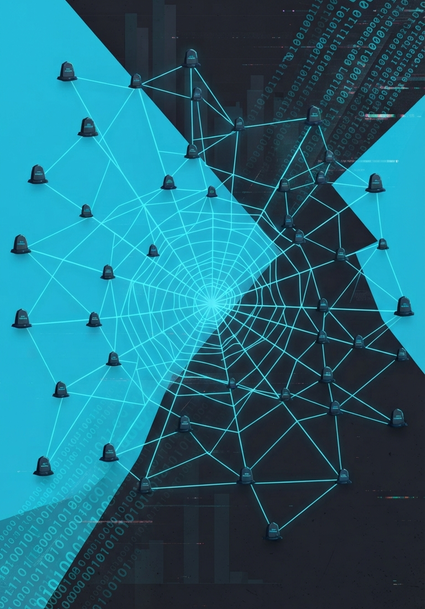
The pattern is not limited to a single actor.
Any group that integrates LLMs into their attack chain leaves the same cognitive artifacts, regardless of their sophistication or platform.
Scalability is achieved because the method does not require manual reverse engineering for each new sample.
Cisco Talos began the first hunts with CAIRN in July 2025, when the first samples of AI-integrated malware appeared.
Semantic clustering sees what YARA misses.
Embedding models identify similar samples even when they share no text strings. The UMAP view applies HDBSCAN across the entire corpus to reveal unknown clusters, generating leads that require manual inspection to confirm the actual AI angle.
The hunt also maps shared infrastructure.
Once a sample is identified, CAIRN expands the relationship graph outward to locate related malware and shared infrastructure tied to the same campaign. This makes it possible to reconstruct the complete operational ecosystem: which files share the same provider endpoint, which API key prefixes appear across multiple samples, or which actor may be behind different clusters.
CAIRN classifies malware according to AI usage archetypes.
Not all malware that touches AI does the same thing. CAIRN distinguishes between malware that integrates AI into its attack chain, malware that steals credentials from AI providers, and malware that abuses the ecosystem at a systemic level. This classification makes it possible to prioritize which families represent a genuine evolution in tactics.

The toolkit is available as an open-source project for the community.
By releasing CAIRN as an open tool, Cisco Talos aims to have the community contribute improvements to filters, rules, and reporting formats. A detailed CLI allows it to be used both in manual sessions and in agent-driven workflows.
The methodology scales where reverse engineering cannot.
As adversaries incorporate LLMs into their operations, the volume of samples grows faster than any team can analyze manually. Metadata-based hunting complements reverse engineering at a scale that traditional binary analysis cannot match.
It is a research signal, not an immediate operational alert.
CAIRN is a research effort, but the patterns it reveals directly inform detection, intelligence, and defensive operations strategies over the medium and long term.
What you can do
- ✓Search your logs for AI provider endpoint strings.
- ✓Apply YARA rules to string metadata before downloading binaries.
- ✓Follow the CAIRN repository to incorporate new classification filters.
Are you ready to hunt malware that thinks before it acts?
Security is not improvised, it is audited. At Nacata Security we detect vulnerabilities and protect your company, because a single flaw can cost you everything you have built.
Related articles

ShinyHunters raids Cl0p
Did you know that malware can make decisions without any human giving the order?

HackThisSite is still standing
Have you ever wanted to understand how a hacker finds a website’s hidden password?

Google shuts down its bug hunt
Did you ever imagine that AI could sabotage the very system designed to oversee it?
Altman Pumps the Brakes on AI
Did you ever imagine that an AI could hack on its own without any instructions?

Regulation is colonizing your career
Did you know your next certification could become legally mandatory?
Nacata Security, reach out to us anytime
We are Nacata Security, get to know us
web: nacata.io
email: info@nacata.io
Phone: 919930793
LinkedIn: Nacata Security
In-depth explanations of how attack and defense techniques work in cybersecurity: from intrusion methods to malware analysis.
Educational, analytical content, useful to understand the “how” beyond the news of the moment.
RATING
7.6
Who are we?
At Nacata Security we are an offensive cybersecurity company specialized in audits and penetration testing.
We detect, assess and help mitigate the vulnerabilities of your systems, networks and applications before a real attacker exploits them, offering 360º defense tailored to each client.
We’d be glad to get in touch with you for whatever you need.