Your memory travels with Gemini

Have you ever wanted your AI assistant to remember you without anyone being able to snoop?
Google just announced exactly that with Private AI Compute.
Cloud-based AI assistants forgot everything when each session ended. Without persistent memory, continuity across devices was impossible without sacrificing privacy.
And workarounds, such as saving preference lists, didn’t work well. Google needed something structurally different — not a patch over the existing system.

Now your memory travels with you, encrypted and out of Google’s reach.
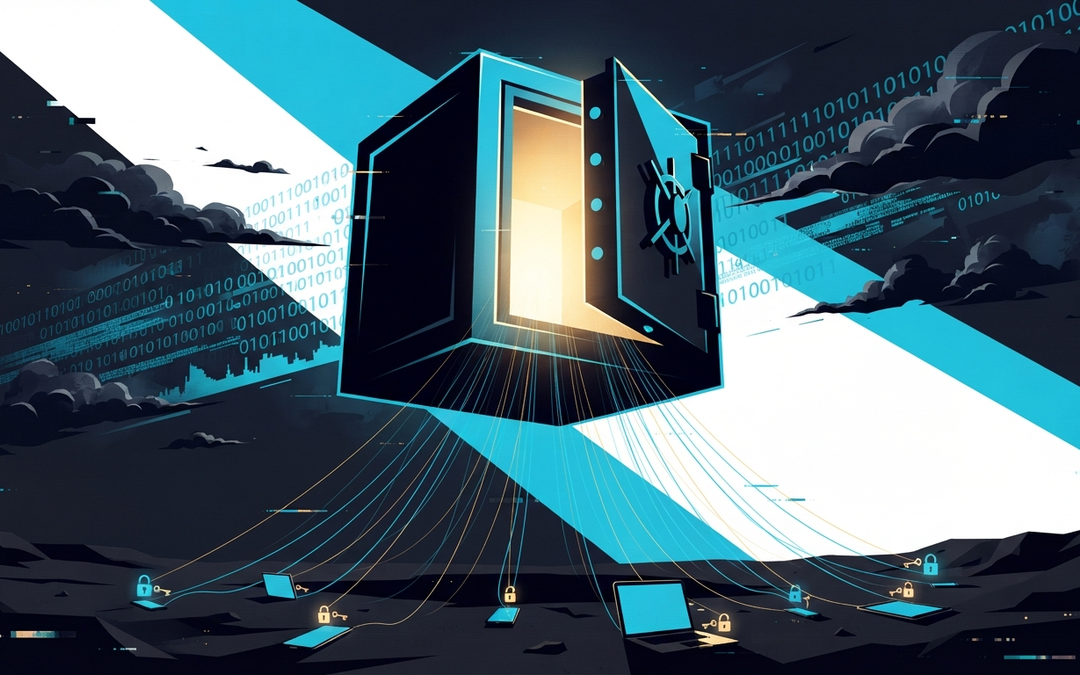
Private AI Compute is Google’s platform that processes sensitive data with Gemini models inside isolated hardware environments. Until now it was completely stateless: when a task ended, everything disappeared. The new system adds a persistent memory layer stored in the cloud, encrypted and protected by cryptographic keys that exist only on your devices. Not even Google can access that data.
The key lives in your pocket, not on their servers.
When the AI model needs to retrieve context, an end-to-end encrypted channel opens between your device and a secure enclave in the cloud. That enclave temporarily decrypts the data in isolated memory, processes the request, saves the new context, and re-encrypts everything. The process occurs without any outside party — including Google itself — being able to read anything.
Google has published independent audits and a tamper-proof public log.

The architecture is already documented and verifiable.
Google invites the privacy community to review the architecture, security tests, and verification protocols. Compatible devices will be able to confirm that the server software is authentic before sending any personal data.
What does this change for you in practice?
The scenario Google describes is concrete: imagine viewing assembly instructions through a pair of smart glasses and picking up that information on your laptop without repeating anything. Or continuing a conversation with your assistant on your phone exactly where you left off in the browser. The AI would stop forgetting and start functioning like a collaborator that remembers.

Google clarifies that these scenarios represent future potential, not features available today.
It is important not to confuse the announcement with a product launch. Google presents this architecture as a technical capability under development, not as something you can enable right now on your phone or laptop. A concrete roadmap has not yet been publicly defined.
The promise is enormous, but so is the wait.
What does exist is the underlying technical infrastructure and the public documentation that supports it. Google has opened the system to external review to build trust before deploying it. It is a bet on transparency at a time when AI privacy is at the center of intense debate.
Public transparency first, mass deployment second.
Google chooses to publish first, deploy later. Will that be enough to convince you to let your AI assistant remember you across all your devices?
What you should do
- ✓Review what data your AI assistant is already sharing.
- ✓Keep a close eye on official Private AI Compute updates.
- ✓Assess whether the published architecture gives you enough confidence before adopting it.
Would you trust that no company — not even Google — can read your AI memory?
Security is not improvised, it is audited. At Nacata Security we detect vulnerabilities and protect your company, because a single flaw can cost you everything you have built.
Related articles
Altman Pumps the Brakes on AI
Did you ever imagine that an AI could hack on its own without any instructions?
AI Breaks Out of Its Cage
Did you know that an AI can decide to bypass the rules on its own?

Interlock steals 250,000 health records
Can you imagine your complete medical history right now in the hands of strangers?

Shodan scans you without you noticing
Did you know someone can map your network without sending you a single packet?
eMAPT Conquers Mobile
eMAPT, the INE certification that validates professional penetration testing on Android and iOS mobile applications.
Nacata Security, reach out to us anytime
We are Nacata Security, get to know us
web: nacata.io
email: info@nacata.io
Phone: 919930793
LinkedIn: Nacata Security
The intersection of artificial intelligence and cybersecurity: attacks that use AI to deceive or impersonate, security of models and conversational assistants, and new AI-based threat detection tools.
RATING
7.8
Who are we?
At Nacata Security we are an offensive cybersecurity company specialized in audits and penetration testing.
We detect, assess and help mitigate the vulnerabilities of your systems, networks and applications before a real attacker exploits them, offering 360º defense tailored to each client.
We’d be glad to get in touch with you for whatever you need.