
ShinyHunters raids Cl0p

Did you know that malware can make decisions without any human giving the order?
CLOSEDQUORUM does it: four AI models vote on every move.
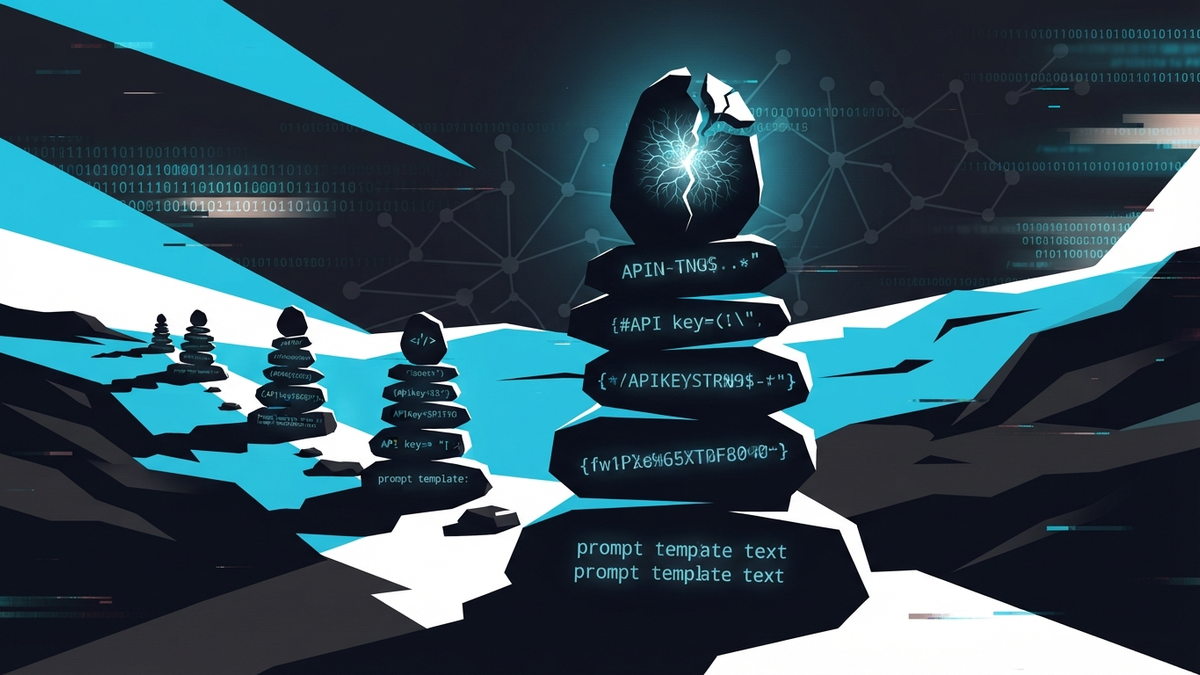
Cisco Talos has documented the first Windows implant that delegates its attack decisions to commercial language models, requiring neither its own server nor a human operator.
DeepSeek, Qwen, Mistral, and Gemini vote on whether to steal credentials, inject code, or establish persistence, and the implant automatically executes the winning option.

Here’s how CLOSEDQUORUM, the voting malware, works under the hood.
The implant, written in Go and targeting Windows, requires no traditional C2 server. It queries up to four commercial AI models and asks them what to do. Each model casts its vote and the option with the most support is executed automatically. It then packages LSASS dumps, browser passwords, and cryptocurrency wallet data, and sends them to the operator’s Discord channel.
No human is in command. Only models that decide.
Talos has not yet confirmed active use, and the public version carries test API keys with no real value. But development versions suggest the creator produces custom copies for each operator. The architecture eliminates the need for proprietary infrastructure: it uses Anthropic, Mistral, or Google servers as its command brain, which complicates attribution and blocking.
The C2 server no longer exists: commercial AI replaces it.

CLOSEDQUORUM is not the only case like this.
The CARBONATO botnet compromises unauthenticated Docker daemons and installs a legitimate AI framework to steal API keys and receive orders via Telegram.
Reusing legitimate AI infrastructure makes malicious traffic nearly indistinguishable from normal traffic.
SpyCloud found active infostealer exposure across 1,787 organizations in the U.S. water sector, with compromised credentials at 258 of them.
Legitimate AI becomes an unwitting accomplice.
When malware uses the same Anthropic or Google endpoints as any legitimate company, traditional detection systems lose their frame of reference. There is no malicious IP to block, no suspicious domain to filter. Only HTTPS traffic toward trusted servers.
AI also builds malware without knowing it.
Group-IB discovered RemControl, an Android banking trojan offered as malware-as-a-service that targets customers of more than 30 banks across Western Europe, the Middle East, and Canada. Its exposed API reveals that parts of the platform were built by deceiving an AI assistant, telling it that it was developing a quiz app. One phishing overlay even contained a full assistant response visible to the user.

The AI assistant thought it was building an educational game.
Once installed with Accessibility permissions, RemControl overlays phishing screens on top of real banking apps, records the screen, and logs every keystroke. The operator gains full control of the device without the user noticing anything until their account is empty.
And meanwhile, BragJack hijacks your browser assistant.
Researchers at Forever disclosed BragJack, vulnerabilities that allow a malicious extension to take control of AI assistants in Chrome, Edge, Opera Neon, and Perplexity Comet. The assistant trusts commands from a specific page, and an installed extension can hijack it by injecting scripts, sending its own prompts without user interaction, and even reading emails or activating the camera.
Bounties paid: between $600 and $7,000.
Three distinct techniques, one common pattern: the AI you use every day can become the attack vector without you noticing.
What you can do
- ✓Review which browser extensions have access to your AI pages.
- ✓Install banking apps only from verified official stores.
- ✓Monitor outbound corporate traffic to AI APIs.
Are you ready for your company’s AI to make decisions without asking your permission?
Security is not improvised, it is audited. At Nacata Security we detect vulnerabilities and protect your company, because a single flaw can cost you everything you have built.
Related articles
CAIRN: AI-powered malware tracker
Did you know that malware using artificial intelligence leaves traces invisible to the naked eye?

HackThisSite is still standing
Have you ever wanted to understand how a hacker finds a website’s hidden password?

MessiahGPT Forges Unlimited Malware
Did you know that buying ready-made ransomware costs less than your streaming subscription?

Ransomware: no one recovers
Do you have a plan to survive a ransomware attack? Almost no one truly does.

eMAPT Conquers Mobile
eMAPT, the INE certification that validates professional penetration testing on Android and iOS mobile applications.
Nacata Security, reach out to us anytime
We are Nacata Security, get to know us
web: nacata.io
email: info@nacata.io
Phone: 919930793
LinkedIn: Nacata Security
In-depth explanations of how attack and defense techniques work in cybersecurity: from intrusion methods to malware analysis.
Educational, analytical content, useful to understand the “how” beyond the news of the moment.
RATING
8.2
Who are we?
At Nacata Security we are an offensive cybersecurity company specialized in audits and penetration testing.
We detect, assess and help mitigate the vulnerabilities of your systems, networks and applications before a real attacker exploits them, offering 360º defense tailored to each client.
We’d be glad to get in touch with you for whatever you need.